
Whole-House Energy Performance: Why Your Home Needs a System, Not Separate Projects
By Epex Team· Epex Home Performance
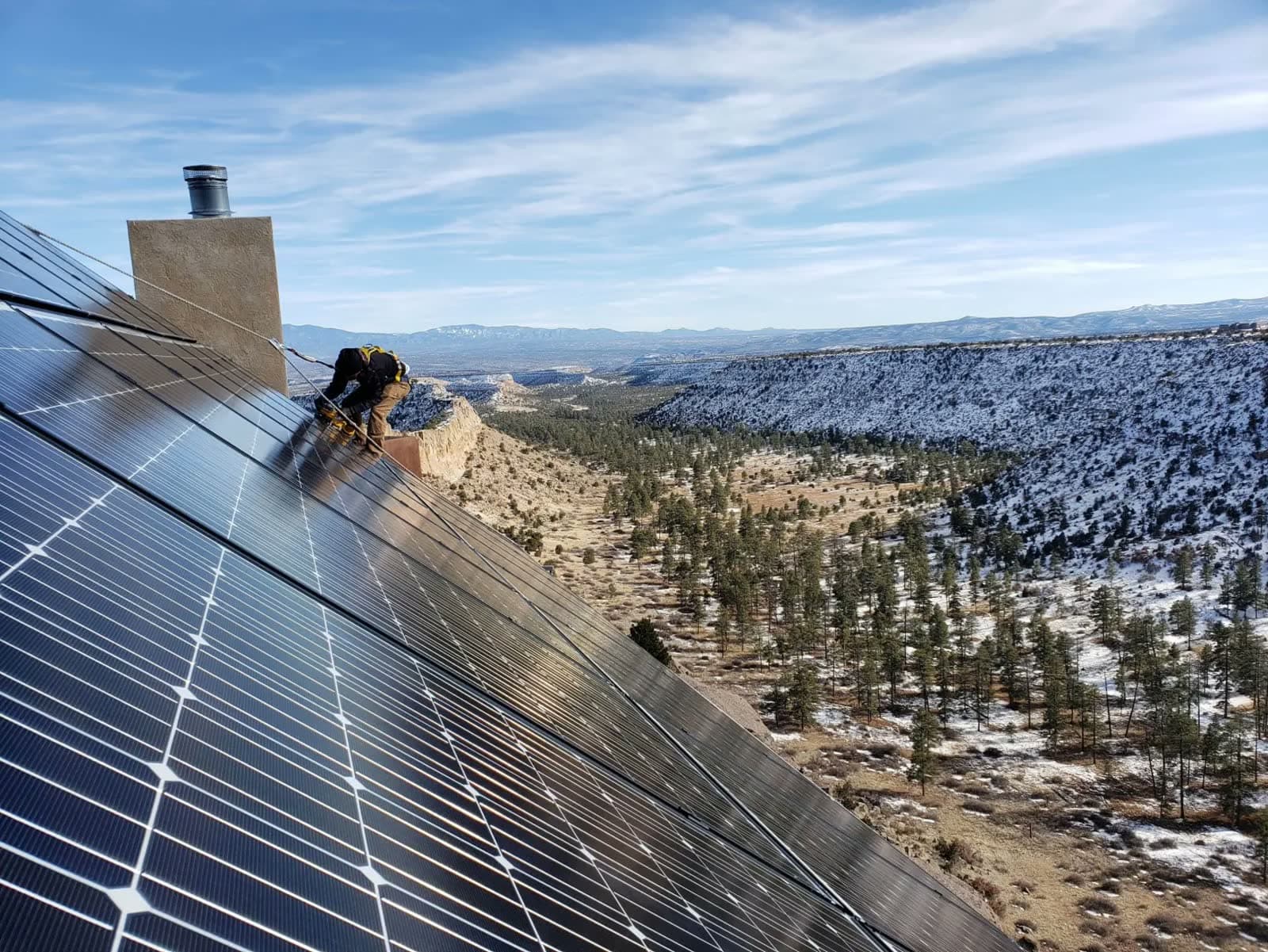
Treating your home's solar, roof, windows, and battery as one integrated system — rather than separate projects — saves 15–30% more on energy costs and avoids common pitfalls like oversized solar arrays, premature panel removal for roof work, and electrical panel bottlenecks. Epex Home Performance is the only Albuquerque contractor that designs all four systems together under one roof.
The Problem With Piecemeal Home Upgrades
Most homeowners approach home improvement one project at a time. The roof starts leaking, so you call a roofer. Your electricity bill keeps climbing, so you get solar quotes. The windows are drafty, so you price replacements. Three problems, three contractors, three timelines, three invoices.
This approach feels logical. It spreads out costs and lets you tackle the most urgent issue first. But it leaves significant money on the table — and it often leads to suboptimal outcomes that compound over time.
Here is what typically goes wrong:
- The solar installer sizes your system based on current energy usage — but your old, leaky windows are inflating that usage by 20-30%. You end up buying more panels than you actually need.
- The roofer replaces your roof without considering solar. Two years later, you add solar panels and learn that the roof layout was not optimized for panel placement. You get fewer panels or a less efficient arrangement.
- Your electrical panel cannot handle the load. You install solar, then decide you want a battery, and discover your 100-amp panel is maxed out. Now you need a panel upgrade that could have been bundled into the original project.
- Each contractor has their own permit process. Three projects mean three sets of permits, three inspections, and three rounds of scheduling. Your home is a construction zone for months instead of weeks.
- Warranty overlap creates gaps. If a roof leak develops at a solar mounting point, is it the roofer's warranty or the solar company's? When two contractors share a roofline, neither wants to own the problem.
The piecemeal approach is not wrong. But there is a better way.
What Is Whole-House Energy Performance?
Whole-house energy performance means treating your home as a single, integrated system instead of a collection of independent parts. It recognizes that your roof, windows, insulation, solar panels, battery, and electrical panel all interact — and that optimizing them together produces dramatically better results than optimizing each one alone.
The concept breaks your home into four interconnected layers:
1. The Building Envelope
Your building envelope is everything that separates inside from outside — roof, walls, windows, insulation, and air sealing. A tight, well-insulated envelope reduces how much energy your home needs in the first place.
In Albuquerque's climate, the envelope matters enormously. Summer highs regularly exceed 95 degrees, and winter lows can drop into the teens. Every gap, crack, and poorly insulated surface forces your HVAC system to work harder.
2. Energy Generation
Solar panels convert sunlight into electricity. But how many panels you need depends directly on how much energy your home consumes — which depends on the quality of your envelope. Fix the envelope first, and you need a smaller (less expensive) solar array.
3. Energy Storage
Battery systems store excess solar energy for use when the sun is not shining. The right battery size depends on your actual nighttime energy needs — which, again, are influenced by the quality of your envelope.
4. Energy Distribution
Your electrical panel is the hub that connects everything. It distributes power from the grid, from your solar panels, and from your battery to your home's circuits. An undersized or outdated panel becomes a bottleneck that limits what you can do.
When all four layers are designed together, each one makes the others work better. That is the core insight of whole-house energy performance.
How Each Component Works Together
This is where the math gets compelling. Each upgrade you make affects the performance of every other component.
Windows Reduce the Load
Old single-pane or aluminum-frame windows are among the biggest sources of energy loss in Albuquerque homes. Energy-efficient windows with low-E coatings and argon gas fill can reduce heating and cooling energy loss through glass by 30-50%.
For a home spending $200/month on electricity, that window upgrade might reduce energy consumption by $40-$60/month — before you even consider solar.
A Smaller Solar System Covers More
Here is the key connection: if your home needs 1,200 kWh/month with old windows and only 900 kWh/month with new windows, you need 25% fewer solar panels to offset the same percentage of your bill.
On a system that would have cost $25,000, that difference saves you $5,000-$7,000 in solar costs. The window upgrade partially pays for itself through the smaller solar system.
Battery Gets Right-Sized
A battery sized for a 1,200 kWh/month home costs more than one sized for a 900 kWh/month home. Lower energy consumption means less overnight storage needed, which means a smaller, less expensive battery system.
The Panel Handles It All
When solar, battery, and potentially an EV charger all need to run through your electrical panel, capacity matters. By assessing the total system upfront — all four layers — we can right-size the panel upgrade once instead of upgrading incrementally as each new component gets added.
The Compounding Effect
Each improvement amplifies the others:
- Better envelope = less energy needed = smaller solar system = smaller battery = lower total cost
- Coordinated installation = one permit, one timeline, one crew = lower labor costs
- Single design = optimized component sizing = no over- or under-building
- One warranty = clear accountability = no finger-pointing
The combined savings from this approach typically run 15-25% lower than doing the same upgrades separately over time.
Real Savings: The Whole-House Advantage
Let us compare two real scenarios for a typical 2,000 square foot Albuquerque home with a 20-year-old roof, original single-pane windows, and a $180/month average electricity bill.
Scenario A: Solar Only
The homeowner installs a solar-only system sized to offset their current electricity usage.
| Item | Cost |
|---|---|
| 9.5 kW solar system (26 panels) | $27,000 |
| NM State Credit (10%, capped at $6K) | -$2,700 |
| GRT exemption on equipment (~7.5%) | -$1,600 |
| Net cost (owned) | $22,700 |
| Annual electricity savings | $1,800 |
| Payback period (owned) | ~12 years |
Three years later, the roof needs replacement. The homeowner pays $2,500 to remove and reinstall the solar panels, plus $14,000 for the new roof. Total additional cost: $16,500.
Five years after that, the windows are replaced for $15,000 — but the solar system is now oversized for the home's reduced energy needs.
Total spend over 8 years: ~$54,200
(2026 math reflects the end of the Section 25D residential federal credit under the One Big Beautiful Bill Act. A lease or PPA on the same system shifts the upfront cost to roughly $0 and trades it for a monthly payment that reflects captured Section 48E commercial credit value.)
Scenario B: Whole-House Approach
The homeowner works with Epex to address everything in one coordinated project.
| Item | Cost |
|---|---|
| New roof (GAF Timberline HDZ) | $13,000 |
| Energy-efficient windows (12 windows) | $14,000 |
| 7 kW solar system (19 panels) — sized for reduced load | $20,000 |
| Panel upgrade (200 amp) | $3,500 |
| Subtotal | $50,500 |
| NM State Credit on solar (10%, capped at $6K) | -$2,000 |
| GRT exemption on solar equipment | -$1,200 |
| Bundled project discount | -$2,500 |
| Net cost (owned) | $44,800 |
| Annual electricity savings | $1,950 |
| Payback (solar portion, owned) | ~10 years |
Total spend: $44,800 owned — and everything is new, warranted, and working together from day one. A lease or PPA on the solar portion would lower this upfront and shift it to a monthly payment reflecting captured federal commercial credit value.
The Difference
Scenario B saves roughly $9,400 compared to Scenario A, gets everything done at once instead of over 8 years, and eliminates the cost and hassle of removing and reinstalling solar panels later. The solar system is right-sized for the upgraded home, the roof is new, the windows are efficient, and the electrical panel supports everything.
The monthly payment on a 15-year loan for Scenario B is roughly $330 — comparable to or less than the homeowner's current electricity bill plus the cost of inevitable repairs to their aging roof and windows. If solar is financed as a lease or PPA inside the bundle, the upfront cost drops further and the monthly payment shifts accordingly.
The Epex Approach
This is exactly why Epex exists. We are not a solar company that also does roofing, or a roofing company that added solar. We are a home performance company that brings every piece together under one roof — literally.
One Consultation
Your first meeting with us covers your whole home, not just one project. We assess:
- Roof condition and remaining lifespan — including drone photography and detailed documentation
- Window age, material, and performance — identifying the biggest sources of energy loss
- Electrical panel capacity — determining what your current panel can handle and what it cannot
- Energy usage patterns — reviewing 12 months of utility data to understand your real consumption
- Your goals and budget — whether you want to do everything now or in planned phases
Based on this comprehensive assessment, we build a prioritized plan that makes sense for your home and your budget.
One Timeline
When you do multiple upgrades as one project, we sequence the work in the optimal order:
- Roof first — because everything else mounts to or depends on the roof
- Windows next — so the building envelope is tight before we size the solar system
- Panel upgrade — so the electrical system is ready for the new loads
- Solar and battery last — sized perfectly for your home's actual post-upgrade energy needs
This sequence typically takes 3-6 weeks from start to finish — compared to months of scheduling, permitting, and coordination when multiple contractors are involved.
One Team
Every crew member on your project works for Epex. Your roofers and your solar installers are colleagues, not strangers from different companies. They coordinate naturally because they work together every day.
This eliminates the most common pain point in multi-contractor projects: the blame game. When one company installs the roof and another installs solar, any issue at the intersection becomes an argument. With Epex, we own the whole project and the whole warranty.
One Financing Package
Instead of financing your roof with one lender, your windows with another, and your solar with a third, you get a single financing package for the entire project. One application, one approval, one monthly payment.
Many homeowners find that their total monthly payment is actually lower than their current electricity bill — meaning they start saving from month one, even before the loan is paid off.
Common Whole-House Upgrade Paths
Not every homeowner needs everything at once. Here are three common approaches we recommend based on your situation and budget.
Starter: Solar Only
Best for: Homes with a newer roof (under 10 years old) and decent windows.
- Solar installation sized for your current usage
- Monitoring system included
- NM state credit ($6K cap), property tax exemption, GRT exemption on equipment; lease/PPA option for federal Section 48E value
- Timeline: 4-8 weeks
- Typical net upfront cost after NM incentives: $15,000-$22,000 owned (less with a lease or PPA)
This is a strong starting point if your building envelope is already in reasonable shape. You can add battery storage later if your needs change.
Standard: Solar + Roof
Best for: Homes with a roof that is 15+ years old, regardless of window condition.
- Complete roof replacement with your choice of material
- Solar installation coordinated with the new roof
- Optimized panel placement built into the roof design
- Single permit and inspection process
- Timeline: 4-8 weeks
- Typical net cost after incentives: $22,000-$38,000
This is our most common project type. Over 60% of our solar customers also need roof work, and doing them together saves an average of $3,000-$5,000 compared to doing them separately.
Premium: Solar + Roof + Windows + Battery
Best for: Homes that need comprehensive upgrades, or homeowners who want maximum performance and energy independence.
- Complete roof replacement
- Energy-efficient window replacement
- Right-sized solar system (smaller than it would be without new windows)
- Battery storage for backup power and energy optimization
- Panel upgrade to support the full system
- Timeline: 4-8 weeks
- Typical net cost after incentives: $38,000-$55,000
This is the full whole-house approach. It delivers the greatest total savings, the most energy independence, and the highest increase in home value. Monthly financing payments typically run $250-$400, which is often comparable to — or less than — the homeowner's current electricity bill plus the cost of deferred maintenance.
Financing Your Whole-House Upgrade
One of the biggest barriers to whole-house upgrades is the perception that you have to pay for everything upfront. You do not.
$0-Down Financing
We offer financing options that require no money down. Your monthly payment starts after your system is installed and producing energy — so you are already saving from day one.
Single Loan, Whole Project
Rather than financing each component separately — which means multiple applications, multiple approvals, and multiple monthly payments — you finance the entire project as one package. This simplifies your finances and often qualifies you for better terms because the total project value is higher.
Monthly Payments vs. Current Costs
Here is the math that makes whole-house upgrades work: your current monthly energy cost is not just your electricity bill. It is also the cost of the roof repairs you are putting off, the efficiency you are losing through old windows, and the value your home is not gaining.
For many homeowners, the monthly payment on a whole-house upgrade is less than their current electricity bill. That means you are cash-flow positive from the first month — paying less per month while getting a new roof, new windows, solar panels, and everything else.
Incentives Apply to the Solar Portion
For owned solar in 2026, the NM Solar Market Development Tax Credit (10% of cost, refundable, capped at $6,000) and the NM gross receipts tax exemption on solar equipment (~7.5%) apply to the solar portion of a whole-house upgrade. Property tax exemption is automatic and permanent. Roofing and windows aren't independently eligible for solar-specific credits.
On a $50,000 whole-house project where $25,000 is solar-related, the NM state stack adds up to roughly $4,000 in upfront savings on the solar portion for an owned system — reducing the effective cost to around $46,000.
The federal Section 25D residential credit no longer applies to owned systems (it ended Dec 31, 2025 under the OBBB Act). If you'd like federal incentive value, the solar portion of a bundled project can be structured as a lease or PPA where the system owner captures the Section 48E commercial credit and passes the value through in pricing.
Frequently Asked Questions
Do I have to do everything at once?
No. We design projects that can be phased if needed. The key is having a plan that accounts for all the components upfront, so each phase is optimized for what comes next. If you do your roof now and solar in six months, we design the roof with solar in mind from the start.
How long does a whole-house project take?
Typically 3-6 weeks from start to finish, depending on scope. A solar-plus-roof project is usually 4-6 weeks. Adding windows and battery adds another 1-2 weeks. Compare that to the cumulative timeline of managing separate contractors over months or years.
Will I need to leave my home during construction?
No. You can stay in your home throughout the project. There may be brief periods (a few hours) when water or power is interrupted for specific connections, but we coordinate with you in advance and keep disruptions to an absolute minimum.
Is whole-house really cheaper than doing projects separately?
In nearly every case, yes. The savings come from several places: shared mobilization and setup costs, coordinated permitting, right-sized components (especially solar), eliminated rework (like removing and reinstalling panels for roof replacement), and bundled pricing. The average savings versus piecemeal is 15-25%.
What if I only need one thing right now?
That is fine. Even if you only need a roof today, we can design it with future solar in mind — choosing the right material, orienting flashing for future panel placement, and making sure the structure supports the additional load. Planning ahead costs nothing extra and saves significant money later.
Get Your Whole-Home Plan
The first step is always the same: a comprehensive assessment of where your home stands today and a prioritized plan for where it could go.
Our whole-home assessment covers:
- Roof condition and remaining lifespan
- Window performance and energy loss
- Electrical panel capacity
- Energy usage analysis (12 months of utility data)
- Custom project plan with prioritized phases
- Accurate pricing with all applicable incentives calculated
- Financing options with projected monthly payments
Every assessment is free, and every recommendation is honest. If your home only needs solar, we will tell you that. If your roof has 15 years of life left, we will not try to replace it.
Schedule your free whole-home assessment or call us at 505-460-8795.
Epex is Albuquerque's only home performance contractor that brings solar, roofing, windows, battery storage, and panel upgrades together under one company — because your home works best as one system, not separate projects.
Frequently Asked Questions
It means treating your home's roof, windows, solar, battery, and electrical panel as one integrated system rather than separate projects. Optimizing them together saves 15–30% more on energy costs than piecemeal upgrades.
If your roof is more than 15 years old, yes. Installing solar on an aging roof means you'll pay to remove and reinstall panels when the roof needs replacement. Doing both at once saves time and money.
Epex Home Performance is the only Albuquerque company that handles solar, roofing, windows, battery storage, skylights, and panel upgrades under one roof — one team, one timeline, one warranty.